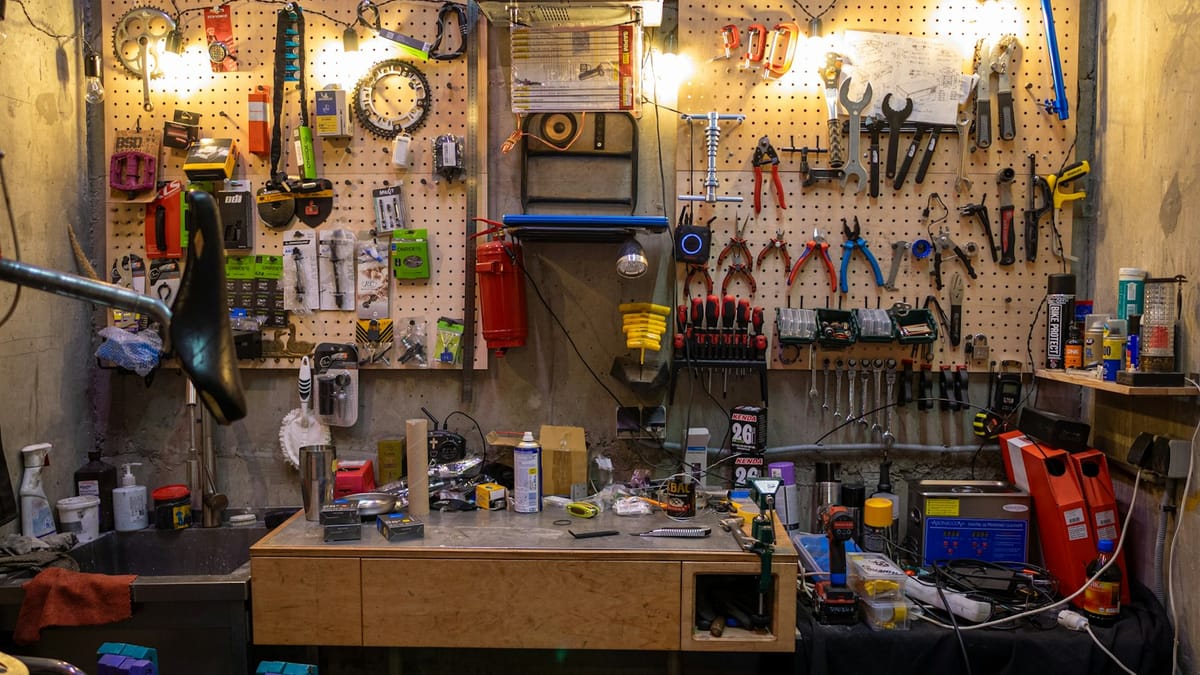

Imagine you run a bike repair shop in Dębniki, a district of Kraków, Poland. Customers praise your repairs, but reviews of two nearby shops repeatedly highlight something else: customers know when they’ll get their bikes back. Should you speed up repairs? First find out whether customers need a faster turnaround or a pickup date they can rely on.
Analyzing competitor reviews helps you see what makes another business easier to choose and which change is worth testing in your own shop.
Compare the businesses your customers actually consider
Start with two or three businesses serving similar customers. For the repair shop, look for places customers can reach with a bike, offering similar work at a similar price. A shop that restores collectible bikes may get excellent reviews and still serve a different need.
The Jobs to Be Done approach starts with what the customer is trying to do. Someone who commutes by bike may need it back before their next working day. If a firm pickup date helps them plan their commute, they might choose the shop that confirms Thursday over one that promises to finish “as soon as possible.”
Compare the same topics in Google reviews
Choose a common period and record how many written reviews you read for each business. Group praise and complaints by repair quality, price, turnaround and communication. A single review can praise the repair and mention a frustrating pickup. When you find only a few examples, read the comments closely before drawing a conclusion.
| What comes up in reviews | What to check in your business |
|---|---|
| Customers praise a competitor for giving a firm pickup date. | Do you give customers a date at drop-off, and can the workshop usually meet it? |
| A competitor’s customers complain about unexpected charges. | Do you confirm the new price before starting additional work? |
| Your customers praise how clearly you explain the fault. | Can you describe that service on your website and keep delivering it as the shop gets busier? |
If six customers praise a competitor’s turnaround and two praise yours, check the size of each review sample and the kinds of repairs involved. Silence about a topic tells you little about how a shop handles it. Ask your team how often customers ask about pickup, turn down a repair after hearing the timing or need to call for an update.

Calculate how much extra work would pay for the change
Suppose your shop has spare capacity midweek. For four weeks, you test giving customers a pickup date at drop-off and contacting them if there’s a delay. The extra staff time costs PLN 240 over four weeks. In this example, an extra paid repair brings in PLN 150. After PLN 70 in variable costs, PLN 80 remains.
Three extra completed and paid repairs bring in PLN 450 in additional revenue and cover the test cost. Four bring in PLN 600 and leave PLN 80 after variable costs and the test. Use these figures as an example and set the threshold with your own costs.
Compare similar weeks. Track enquiries, accepted jobs, on-time pickups, paid repairs and sales. Account for weather and season. If you get more work but miss more pickup dates, check how much the workshop can handle before continuing.
How to use Competitor Analysis in HH Echo
Use Competitor Analysis to compare businesses on the same aspects of the customer experience, such as service, convenience and perceived value. Start with a difference that could affect the customer’s choice. Then read the original reviews and see what it looks like in practice. In this example, the shop can decide whether to test faster turnaround or make pickup dates more reliable. HH Echo
Choose one difference, one action and one sales result to track. That turns competitor reviews into a decision you can evaluate using your own costs and sales.